





Key Takeaways:
Social commerce is no longer an emerging channel or experimental test. In today’s fragmented retail landscape, it’s the infrastructure underpinning how modern consumers discover, evaluate, and purchase products. But more than that, social commerce is changing how consumers build relationships with brands.
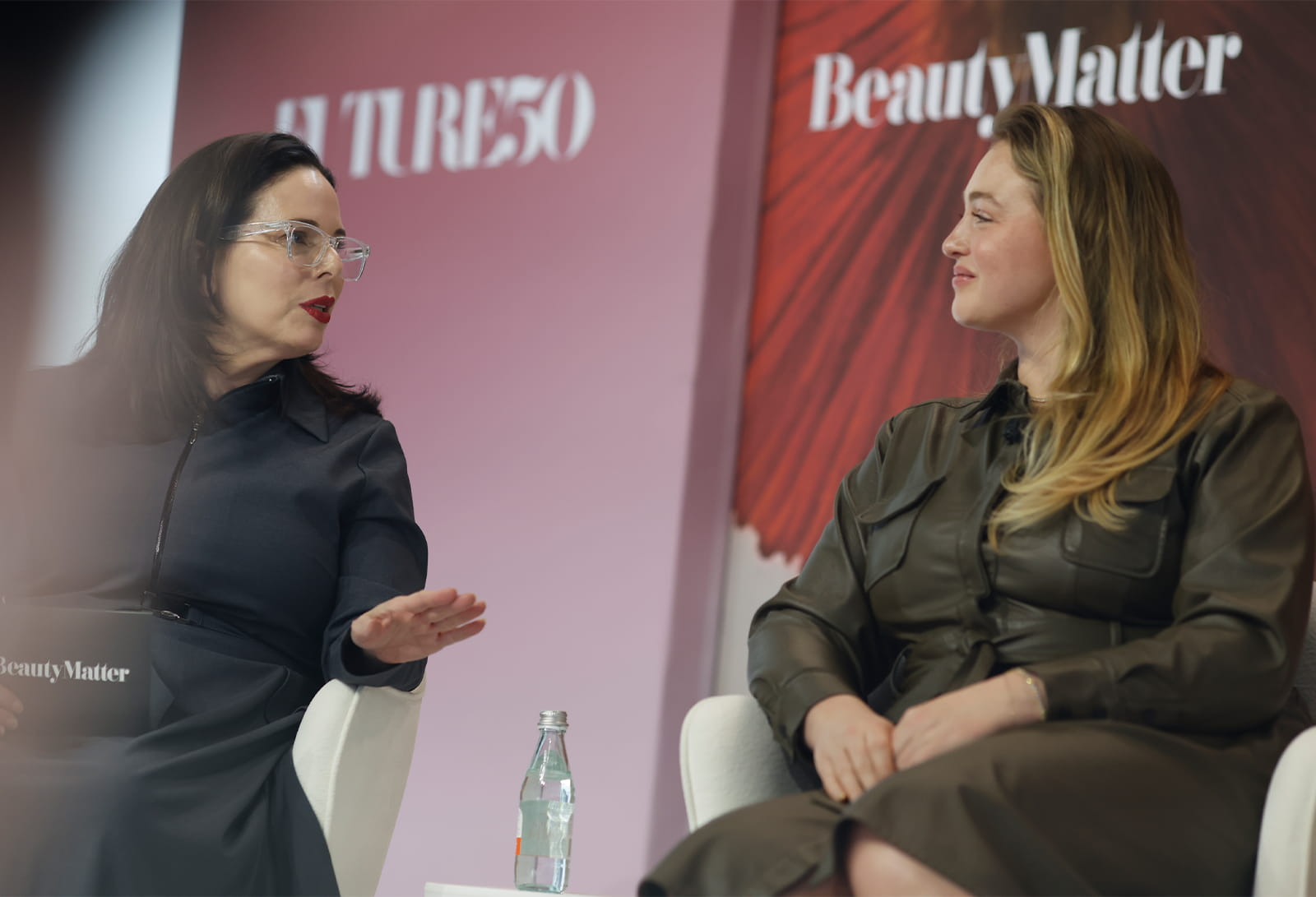
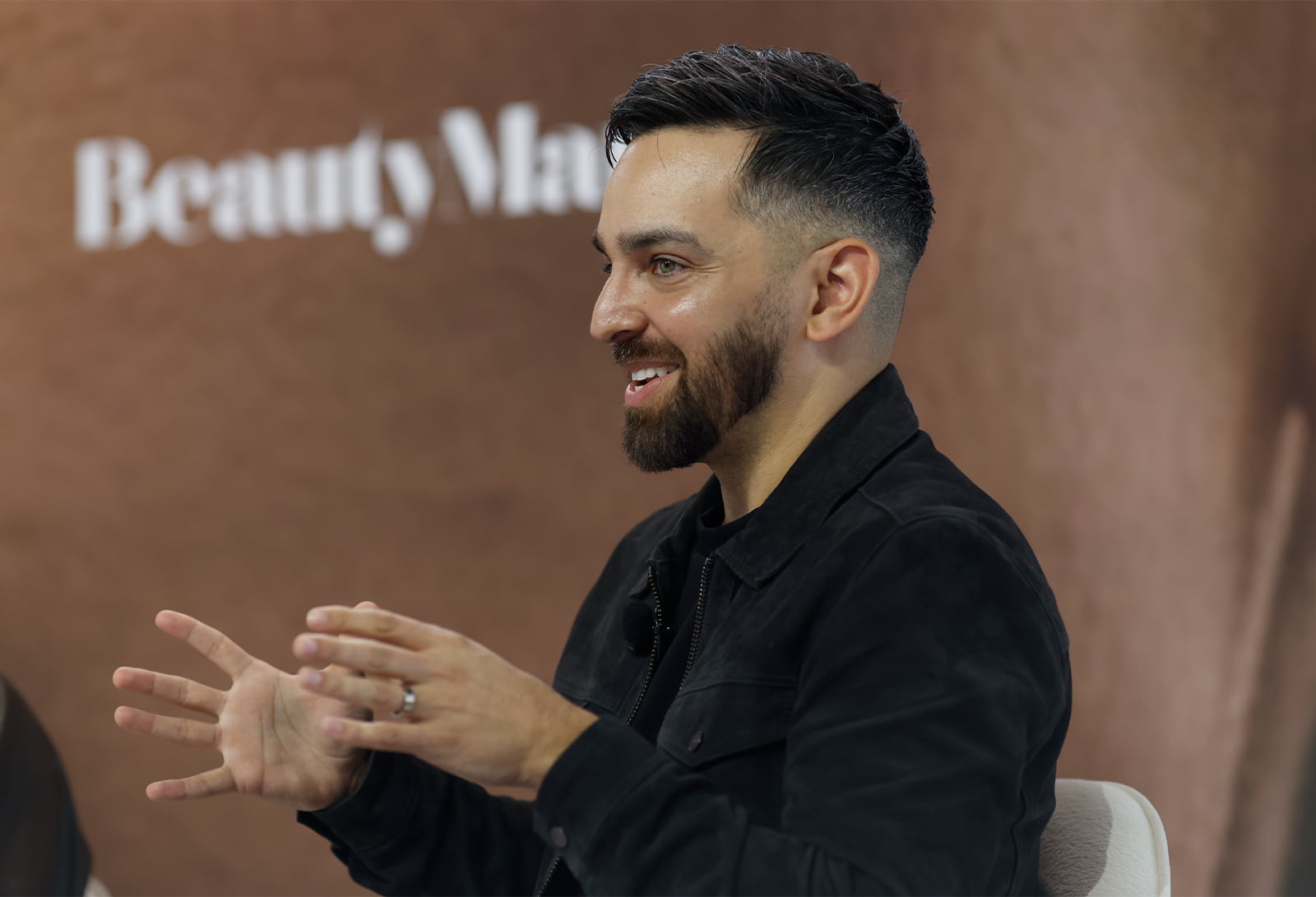
At BeautyMatter’s recent FUTURE50 Summit, Senior Editor Janna Mandell convened a panel of founders and operators who are actively shaping the social commerce arena. In a conversation called “Social Commerce: The Strategic Center of Modern Retail,” Mandell was joined by Iskra Lawrence, founder of Saltair; Bridey Lipscombe, Chief Marketing Officer of P.Louise; and Dr. Muneeb Shah, board-certified dermatologist and founder of Remedy.
“Product discovery via e-commerce is now considered the old paradigm,” Mandell told the audience in her opening remarks, citing data that social commerce now drives 68% of global beauty purchases.
“Brands need to meet their customers where [they] shop, but brands need a lot more than a connection between their backend and TikTok Shop. They need a profound connection with their customers—one that builds loyalty and real trust.”
The Rise of the CreatorFounder
For Lawrence, social commerce begins with connection. Conversion comes later. She built an audience of more than a million people over nearly two decades before launching Saltair, emphasizing that her brand was born not from opportunity but from her own personal need and a deep understanding of her community.
After having her first child, Lawrence recalled feeling profoundly isolated and searching to rediscover herself and who she was in this new phase. The name Saltair came from that moment of peace she feels when she’s at the beach: toes in the sand, waves crashing, the sun on her skin. As a new parent, a beach vacation was worlds away, so instead, she visited seascapes in her mind.
“Saltair was that moment that I needed to take for myself, those five minutes in the shower,” she said. “And I realized if I really need this, I am sure my community does too.”
Shah found his community on TikTok during the pandemic when, frustrated by widespread misinformation, he began posting educational skincare content.
“I was seeing so much misinformation about the skin, so I thought, let me make some videos,” he said. “At the time there was really nobody who was speaking to the camera to patients the way that they would act in a clinic.”
For the first year, Shah created content without earning a cent from his videos, purely because he genuinely loved the process. “There was something compelling about crafting videos that resonated with people, offered real value, and prompted action,” he said. “That’s what made me fall in love with content creation as a craft.”
What followed was rapid growth and a realization that consumers were actively seeking credible, digestible expertise. That insight ultimately led to the creation of Remedy, a brand built around simplifying complex skincare routines. Shah’s background as a dermatologist informed the product formulations, and his experience as a creator helped shape Remedy’s go-to-market strategy. “I used to have to give an entire dermatology concept in 15 seconds,” he said. “So I got really good at saying only the things that mattered.”
QVC Was the Blueprint, TikTok Live Is the Future
While much of the US market is still experimenting with social commerce live shopping, brands like P.Louise are already operating several steps ahead. The UK-based brand has built one of the most advanced social commerce operations in beauty, driven largely by TikTok Live.
P.Louise once recorded £2.7 million ($3.6 million) in sales during a single 14-hour livestream, with over 35,000 units sold. The brand’s TikTok Live success stems from a fundamental shift in how it defines itself.
“We see ourselves as an entertainment-first brand,” said Lipscombe.
P.Louise runs what Lipscombe effectively calls a continuous, interactive reality show, complete with live hosts, daily programming, and serialized content. Each live host produces about 10 pieces of content a day, and beyond that, the brand has cameras that follow every single move they make around the building.
“We’ve created a live reality TV show that talks back,” she said. “It’s the perfect way to retain a community, because the audience feels like they have a TikTok star talking to them.”
Lipscombe emphasized that the brand prioritizes retention over reach. While the amount of sales P.Louise makes from each live show is important, it also generates real-time data that the team can incorporate into its product strategy. Social commerce informs and shapes a brand's entire strategy.
“Lives are one of the most successful parts of the business, and they take up about 40% of our overall turnover on the platform, which is pretty much unheard of,” said Lipscombe. “That's where a lot of the profit comes from, and it's where our highest average order value comes from. It's a lot of cameras, a lot of content, and it’s every day.”
Inside the Affiliate Economy
For all three brands, affiliate networks, or the creators that a brand taps to create content for the brand, are the engine that powers the social commerce machine. The most effective programs are high-touch, relationship-driven, and intentionally built.
Lawrence described Saltair’s approach as “grassroots,” emphasizing direct communication with affiliates through the brand’s Discord channel, webinars, and messaging platforms. “I’m in there all the time communicating with our affiliates,” she said. The payoff is immediate and measurable. “When I do a live webinar, we have over 100 pieces of content within 24 hours,” she noted.
Some affiliates she talks to expressed that certain brand relationships can feel transactional.
“Brands throw product at them and expect a piece of content in return for no payment, and if they don't, they're taken off the PR list,” said Lawrence. “These are real humans. When you build a real relationship with them, you have immediate brand loyalty and connection.”
Lipscombe echoed this, highlighting the importance of founder presence and offline engagement, even at scale. “We have 320,000 registered affiliates … but it’s about those core relationships,” she said.
Shah took it a step further, reframing affiliates as core drivers of the business. Remedy has hired a full-time employee dedicated to building out the affiliate program, but Shah stays highly engaged in this part of the business. Remedy’s top affiliates have his phone number and reach out asking him to pop into their lives or answer questions in the TikTok Live chat.
“They’re building your business for you,” he said. “They're obviously making their cut of that, but without these affiliates, you can't build the business, so I treat them that way. They’re just as much a part of this business as I am, and I couldn't do this without them.”
Affiliates have influence beyond the screen, too. When Remedy launched in Target, its affiliates were shopping in stores and showing off their hauls, encouraging their followers to shop Remedy in-store. “Everybody knows that if you’re a brand in Target, you have to move units,” said Shah. “It really meant a lot to us to see our affiliates talking about our retail launch.”
The Profitability Paradox of TikTok Shop and Virality
While still underutilized in the US, TikTok Live has become a dominant force in the UK, where thousands of brand broadcasts happen daily, and conversion rates are significantly higher. More importantly, its impact extends beyond the platform itself.
Lipscombe highlighted what she described as the “halo effect” of lives. During one of P.Louise’s record-breaking livestreams, which generated £2.7 million ($3.6 million) in sales, the brand saw a simultaneous 210% increase in site traffic and sales, despite no corresponding promotions outside of TikTok. The spike, she explained, was driven purely by awareness.
That dynamic is increasingly shaping how brands should think about social commerce as a demand engine that can drive performance across DTC and retail. In the UK, Lipscombe noted, brands are beginning to structure campaigns around TikTok “sellout moments,” using the platform to generate momentum that carries into other channels, including TikTok’s emerging Out of Phone integrations that direct viewers to physical retail.
Despite its scale and influence, TikTok Shop is not without its challenges, particularly in terms of profitability. Shah offered a candid breakdown of the economics, noting that brands can easily lose money on the platform once fees, commissions, discounts, and shipping are taken into account. “You could be losing money for every sale on TikTok,” he said.
The key is understanding TikTok’s role within a broader marketing funnel. Viral moments on the platform, Shah noted, can drive measurable lift across Amazon and DTC. It’s important for brands to understand the trickle-down effect, because no brand can go live 24/7.
“Before Remedy launched in Target, we were paying very close attention to whether or not TikTok was profitable, because we're a small business,” said Shah. “But now that we're in Target, it’s okay if we break even on the platform as long as it's driving awareness.”
Going viral on TikTok is a rite of passage for brands, but if you ask Shah, it’s not all it's cracked up to be—especially for brands operating across multiple channels. If a brand goes out of stock on TikTok Shop, viewers keep scrolling, but in a retail environment, being out of stock might cause shoppers to switch to competitors, resulting in lost immediate sales and reduced long-term loyalty. On one occasion, Remedy had to divert all of its DTC and TikTok inventory to Target after a few of the brand’s products went viral on the platform.
“When a viral product is out of stock, you lose the moment because people have short attention spans, so they go to something else,” he explained. “You can't plan virality, but we try to plan our supply chain well enough that we have enough inventory to support some upside scenarios—not so much that we have too much inventory on hand but enough to make sure that we can make the most of those moments when they do happen.”
Social Commerce as Entertainment
The transformation of commerce into entertainment is a hallmark of the social commerce shopping experience, and nowhere is this more evident than in P.Louise’s “mystery boxes,” which have become one of the brand’s top-performing products.
“People are not buying a product,” Lipscombe said. “They’re buying dopamine and adrenaline.… They’re buying an experience.”
This gamification of shopping, rooted in surprise, scarcity, and perceived value, reflects a broader change in consumer behavior. Today, shoppers are making purchases from a more emotional, social, and performative perspective. In a social commerce environment, those experiences are amplified through content creation, sharing, and community participation.
“Every time we launch a new mystery box, we do it on live,” said Lipscombe. “Mystery boxes are always within our top 10 products, so they're incredibly popular. Every time we drop a new mystery box, we see huge spikes in content creation. So for us, it's really important that we get it right. Everybody has to feel lucky when they open it.”
The Future: Faster, Closer, More Human
If there was a unifying theme across the discussion, it was that the brands winning in social commerce are not necessarily the biggest, but they are the closest to their customers. They move faster, listen more, and engage directly.
In today’s competitive environment, differentiation comes from building brands that people genuinely care about. As Shah told the audience, “You have to build a brand that people love while still trying the newest things quickly.”
Selling products is just one part of the equation. Today, shopping is social, cultural, and increasingly communal, which is why it’s more important than ever for brands to build a world that people want to be part of. Social commerce may be the new “it” strategy now, but no one really knows what’s around the corner. Brands that prioritize creating community and building their own sandbox to play in are primed for success across any social and retail environment.